If your family lived in Hamilton, Motherwell, Wishaw, Blantyre, Uddingston or Larkhall in the early 1900s, the Lanarkshire Tramways Company was part of their daily world. For nearly thirty years the trams changed how people worked, travelled and connected with one another. They linked communities that had previously felt far apart, carried thousands to the pits and steelworks, and offered ordinary families a chance to explore places they had never seen before.
This guide takes you through the full story of the tramways, from their difficult beginnings to their final journey in 1931. It also explains how this history can help you understand the lives of your ancestors and the communities they belonged to.
Before the trams: a world of long walks and poor roads
At the end of the nineteenth century, Lanarkshire was an industrial powerhouse, full of busy towns and villages built around pits, ironworks and new factories. Yet travel between these places was surprisingly difficult. Roads were often muddy, rutted and unlit. Workers walked miles to their shifts, and visiting relatives in a neighbouring town could take hours.
Early attempts to build a tramway date back to the 1870s but failed repeatedly. Councils argued over costs, track gauge, and whether trams would clog narrow streets used by horses, carts and coal wagons. In Hamilton, the idea of trams running through the town centre was dismissed as unsightly and unsafe.
For a long time, the idea simply refused to get off the ground. But by the end of the century the need for a modern transport system was impossible to ignore. The county was growing fast, and people needed a better way of getting around.
Planning the tramway: a difficult path to approval
A breakthrough finally came in November 1899 when a group of promoters, supported by the British Thomson-Houston Company, gained local backing for an electric passenger tramway. The electric aspect was important. It reassured councils that the new system would be cleaner and more modern than earlier steam-powered proposals.
Parliament passed the Hamilton, Motherwell and Wishaw Tramways Act in 1900, allowing the company to build its first lines. Three years later, the Lanarkshire Tramways Order Confirmation Act officially renamed the company and authorised a major expansion across the county. These Acts gave the tramway legal permission to build, operate and charge fares.
Building the network: a modern transformation
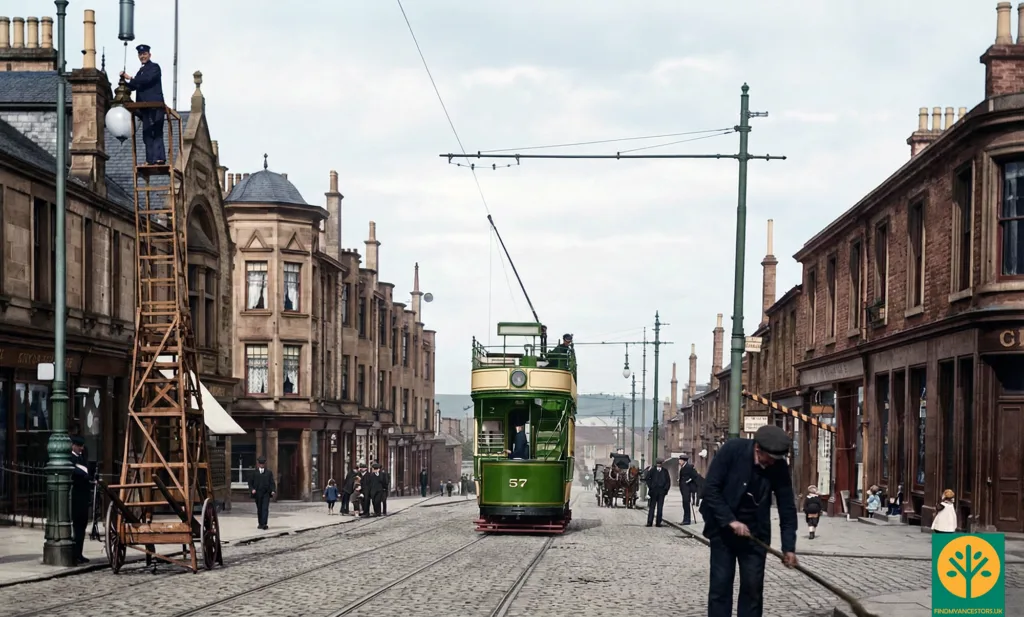
Construction began in June 1902 and immediately reshaped the landscape. Roads were opened up for trackbeds, and new granite setts were laid to create solid, modern surfaces where only mud had existed before.
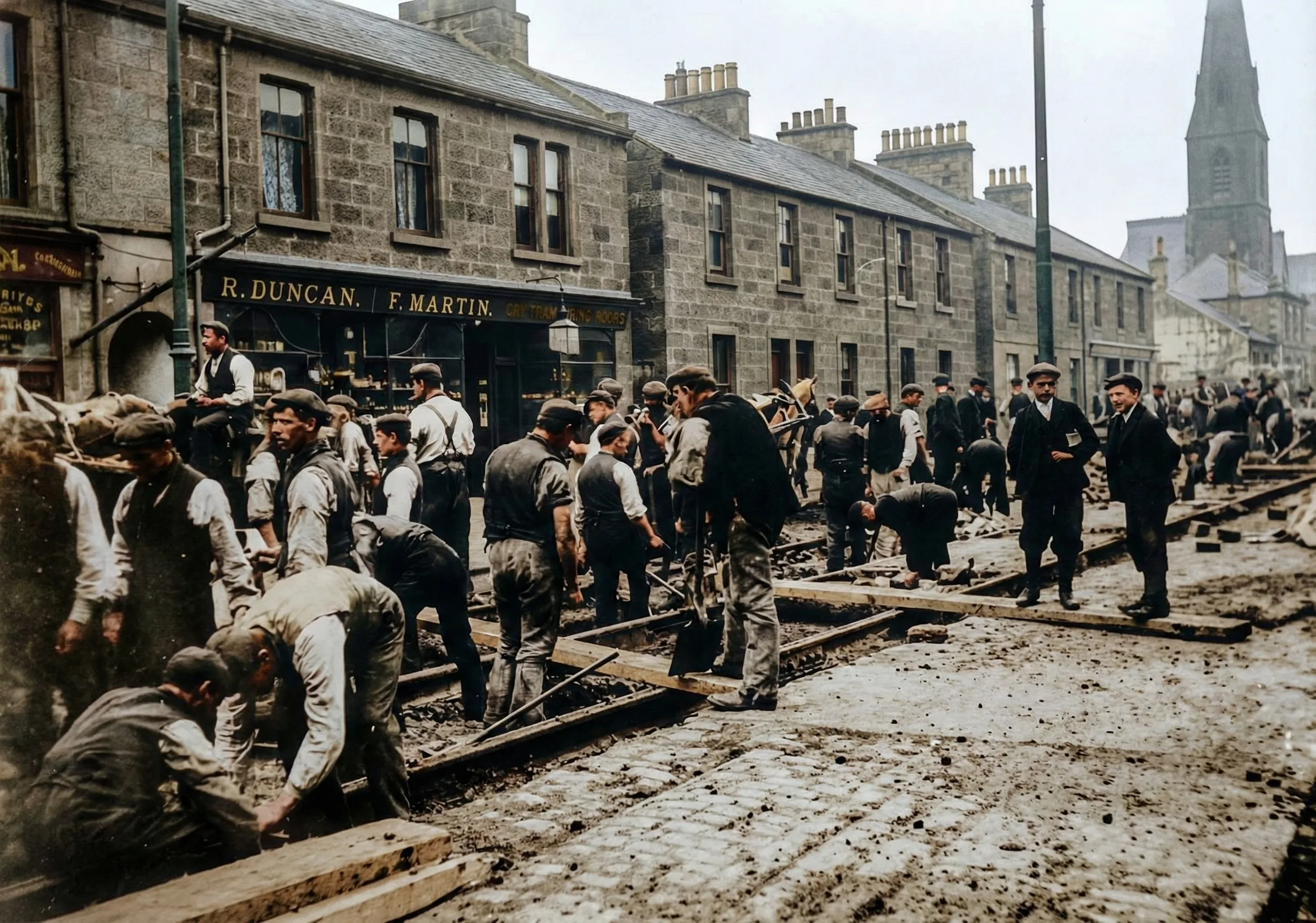
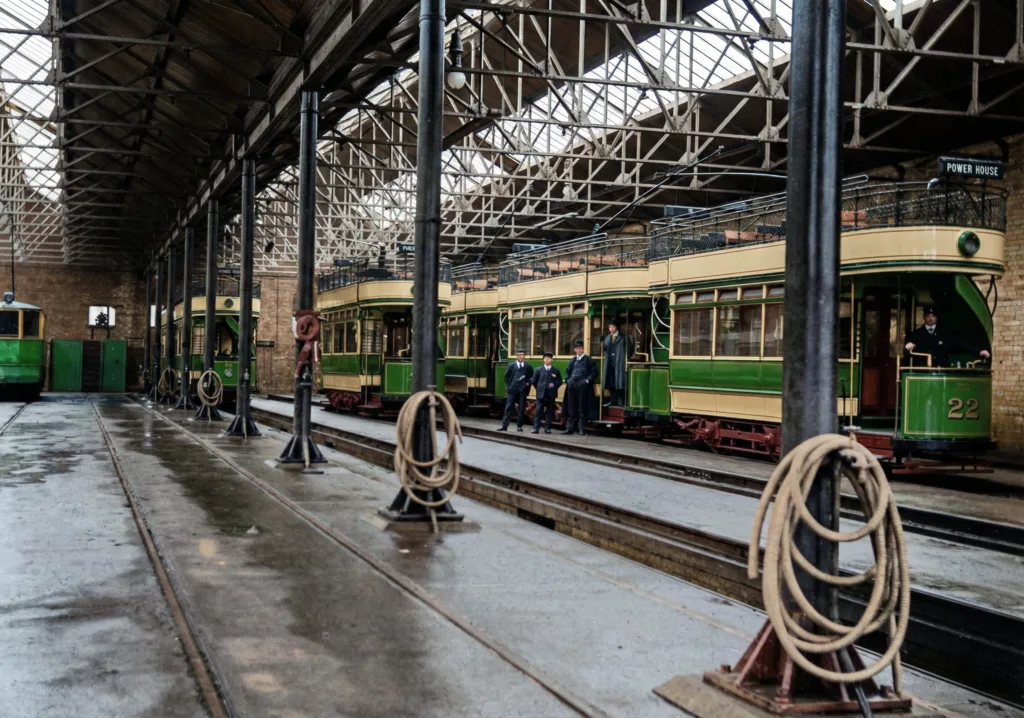
Installation of poles and overhead wires caused some grumbling about spoiled views, but many residents were excited by the promise of quick, cheap travel. Even the Power House in Motherwell, where the trams were serviced and stored, was a sign of modernity.
Trial runs began in June 1903, and the official inspection by the Board of Trade took place the following month. On 22 July 1903, the trams opened to the public.
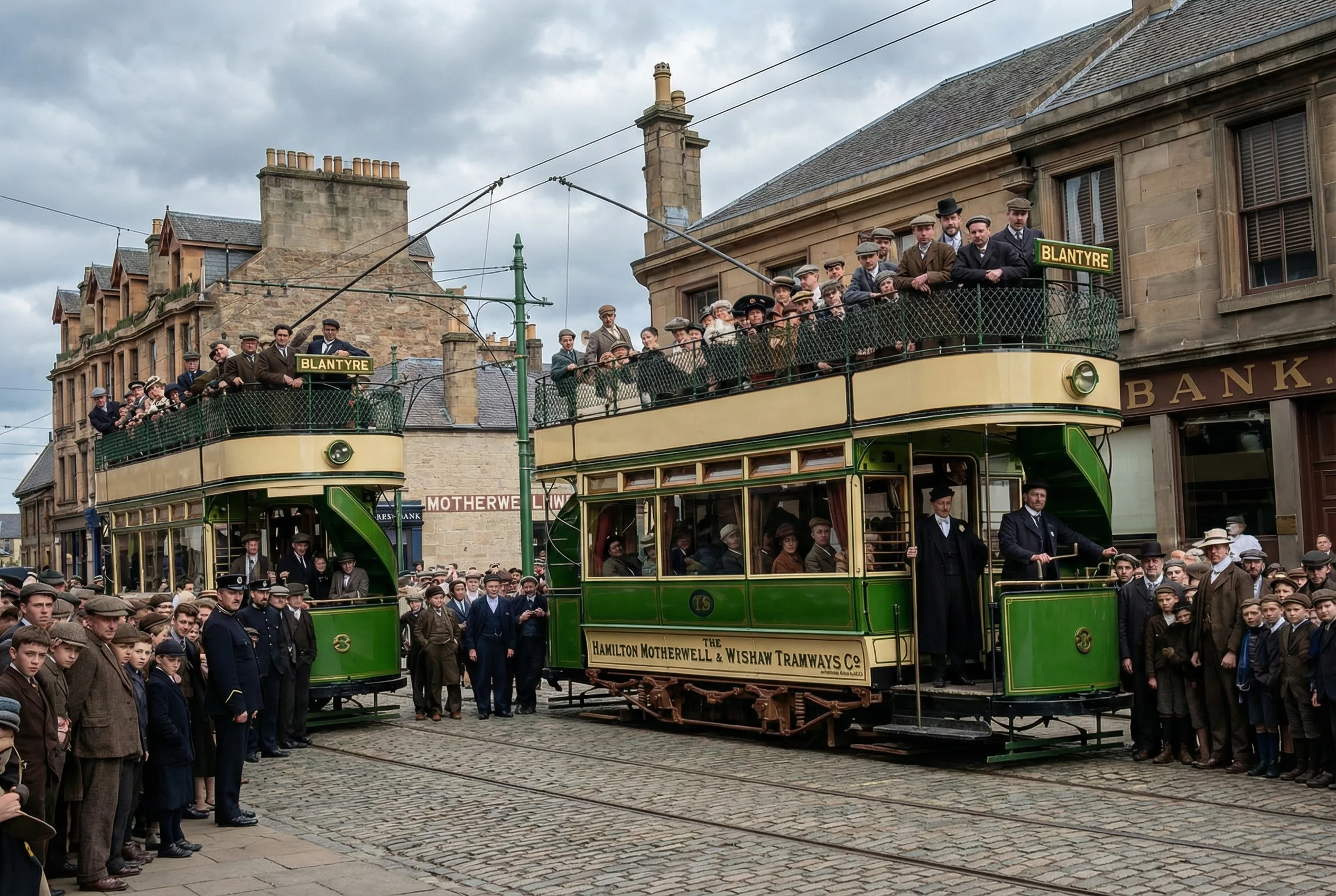
The Motherwell Times estimated that around thirty thousand people travelled on the trams that first day. The weather was warm, the local fair was in full swing, and families queued for the novelty of riding in the open-top cars. For many, it was the most exciting public event the area had seen for years.
Expansion and the golden years of travel
After opening, the network expanded quickly through a series of new routes. By February 1914, the system covered 28.43 miles, making it the largest company-operated tramway in Scotland.
Key route openings included:
• 1905: Hamilton to Larkhall
• 1907: Blantyre to Cambuslang, linking with the Glasgow Corporation system
• 1909: Hamilton to Uddingston
• 1909: Wishaw to Newmains
• 1911: New Stevenson line
The tramways ran at regular intervals throughout the day, with quarter-mile spacing between stops. Fares were intentionally low, often just under a penny a mile, so the service was affordable for miners, steelworkers, shop staff and families.
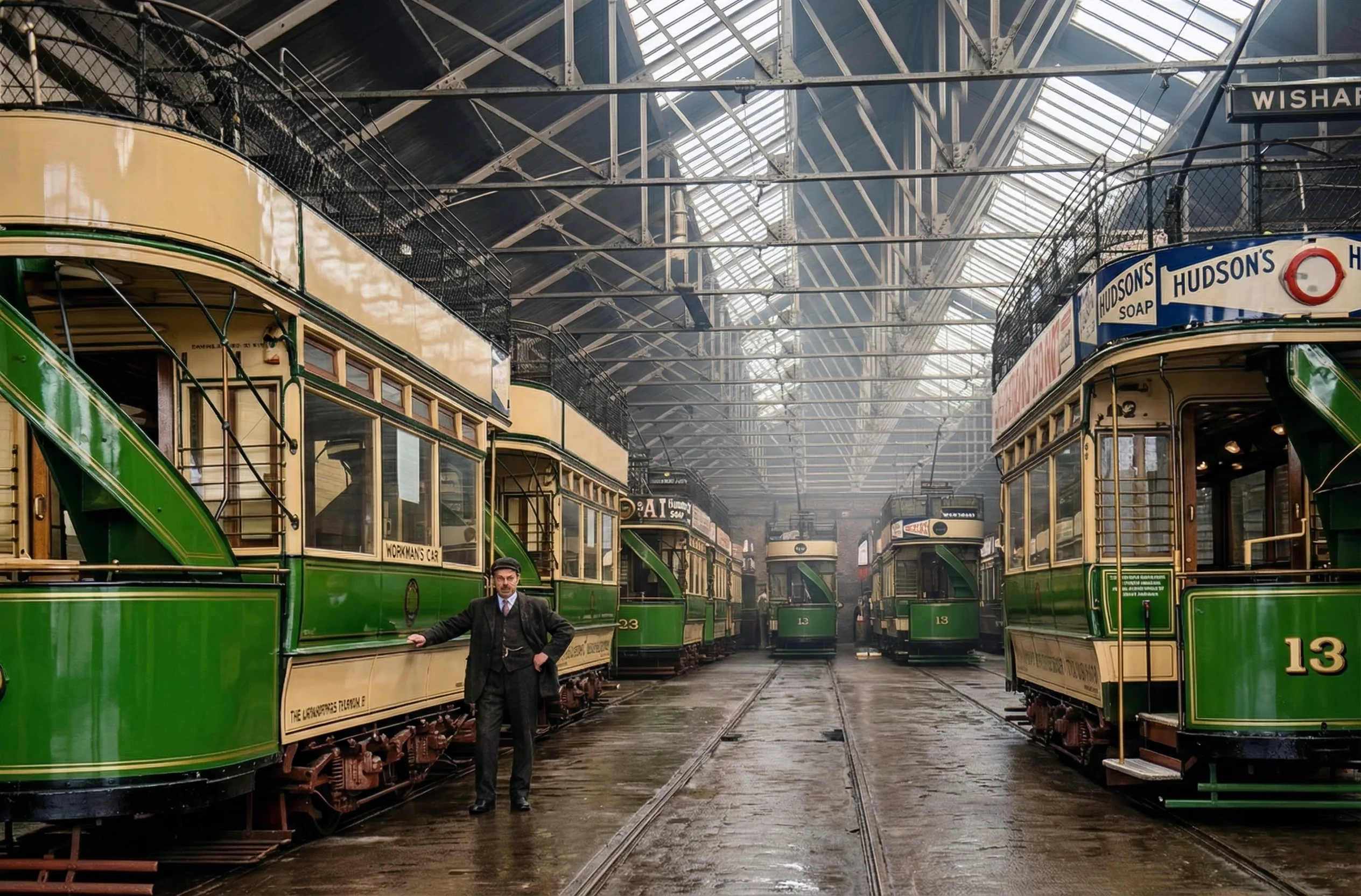
These years marked the high point of the company. The trams were busy, profitable and widely used. On busy holidays, tens of thousands of passengers travelled for work, shopping, church, courting, visiting relatives, or simply enjoying a ride.
Everyday life on the trams
The trams became part of the rhythm of daily life. Miners took the tram to reach early shifts. Children used them for school. Couples used them to visit the cinema or dance halls in neighbouring towns.
The sound of the bell was familiar. Shops set their opening hours around tram arrivals, and families planned their travel using printed timetables available at termini and local businesses.
The trams were not just transport. They shaped opportunities. People could work further from home, choose from a wider range of employers, and expand their social worlds. For a beginner researching family history, this simple fact opens many possibilities. If a relative moved towns, changed job, or married someone from a neighbouring area, the tramways were often the reason why.
Women on the trams during the First World War
The First World War brought huge change. With many male employees joining the forces, the Lanarkshire Tramways Company began employing women from June 1915.
Women worked as conductresses, drivers (known as motorwomen) and inspectresses. This was groundbreaking in a county shaped by heavy industry. The sight of women confidently operating large electric trams challenged long-standing views about gender and work.
Some early friction was reported. Children tried their luck with “cheek” in the hope of a free ride, and police sometimes rode the trams to keep order. But the women quickly gained respect. They handled busy routes, difficult passengers and harsh weather with the same skill as their male counterparts.
Historians often argue that the tramway played a larger role in advancing women’s work opportunities in Lanarkshire than the suffragette movement did locally. The visibility of women in these roles showed that women could take on responsible, skilled work in public view.
A notable moment came in 1918 when female staff went on strike over pay, temporarily halting the service. Their actions reflected wider labour tensions in wartime Britain and demonstrated increasing confidence among women workers.
Post-war pressures and the rise of the motorbus
After the war the tramway faced growing financial difficulties. The system was worn from heavy wartime use, and materials for repairs were expensive. Fare increases were unpopular and caused drops in passenger numbers.
The biggest challenge came from motorbuses. These buses, often run by independent operators, were cheap to run and could easily alter routes to capture demand. By 1925 there were 230 buses in the area, with 200 competing directly with tram routes.
The tramway was placed at a significant disadvantage. While trams had to pay for road maintenance, bridge widening and local rates, buses used the same roads without contributing to their upkeep. Operating a bus was said to cost only a seventh of operating a tram.
This imbalance is the major reason the tramways began to lose money. By the mid-1920s the company faced heavy losses. Share prices fell dramatically, and services became harder to sustain.
Closing the network and the final tram
By the late 1920s the company recognised that the future lay in buses. The Lanarkshire Traction Order Confirmation Act of 1929 gave the company the legal power to abandon its tramway system and transition fully to motorbus operation.
The company officially changed its name to the Lanarkshire Traction Company in 1930.
Closures were staged:
• October 1930: Blantyre route closed
• February 1931: Last tram in Lanarkshire ran from Bellshill to Motherwell
Crowds gathered at the Power House in Motherwell to watch the final car arrive. It was both a celebration and a farewell to a familiar part of everyday life.
The rails and granite setts were lifted soon afterwards, and major road widening schemes followed.
What remains today
Although the tramways disappeared, their legacy continued. The Lanarkshire Traction Company became part of Scottish Motor Traction and formed the core of what later became Central SMT. Today’s bus routes still follow many original tram corridors.
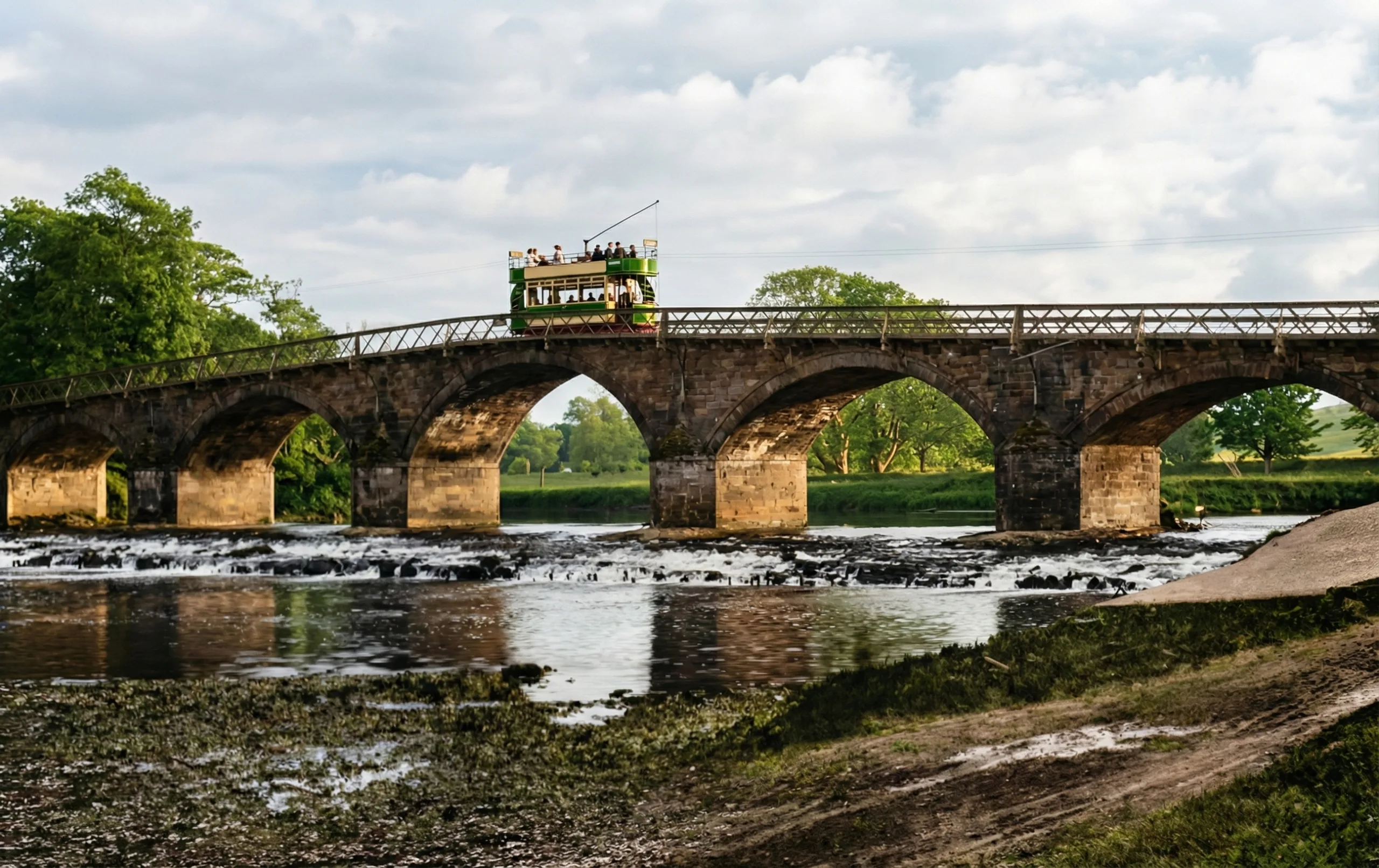
One tramcar survived. Number 53 spent decades as a hay store before being rescued and fully restored. It now runs at the Summerlee Museum of Scottish Industrial Life in Coatbridge, giving visitors a rare chance to ride a piece of Lanarkshire’s past and perhaps sit exactly where your ancestors once did.
How this history helps your family research
If your ancestors lived in Lanarkshire between 1903 and 1931, these trams shaped their lives in ways worth exploring:
• Where they worked and how far they could travel
• Which schools, shops or churches they used
• Where they met friends or future partners
• What time they left for work
• How they visited relatives in neighbouring towns
• Whether a female ancestor worked on the trams during the war
• Whether a male ancestor moved into bus driving after 1920
Understanding the tramways gives you a clearer picture of your ancestors’ daily routines and the opportunities they had. It helps turn names and dates into fuller, more human stories.